
Ever stepped out of the shower, wrapped your hair in that fluffy bath towel like you’ve done since middle school… only to find it frizzy, tangled, and snapping like overcooked spaghetti by noon? Yeah. We’ve all been there. But here’s the tea: that trusty terry cloth isn’t doing your strands any favors—it’s actively damaging them.
In this post, you’ll discover why traditional towels wreck hair cuticles, how a purpose-built hair towel wrap reduces breakage and drying time, and exactly what to look for when shopping (spoiler: not all “microfiber” is created equal). You’ll also get real-world styling tips, product recs tested on everything from 4C coils to fine-strand blondes, and one terrible piece of advice we almost believed (until our ends split in protest).
Table of Contents
- Why Bath Towels Are Secretly Bullying Your Hair
- How to Use a Hair Towel Wrap Correctly (Without Looking Like a Spa Ghost)
- 5 Hair Towel Wrap Best Practices That Actually Work
- Real Results: From Frizz Factory to Silk-Sleek in 3 Weeks
- Hair Towel Wrap FAQs
Key Takeaways
- Rough cotton bath towels cause friction that lifts hair cuticles, leading to frizz, breakage, and dryness.
- A true hair towel wrap uses ultra-fine microfiber or bamboo fibers to gently absorb water without abrasion.
- Proper wrapping technique (not too tight!) minimizes tension and preserves curl pattern or straight styles.
- Drying time drops by 30–50% with quality hair towel wraps, per cosmetic science studies.
- Avoid “microfiber” blends under 80 gsm—they’re often just rebranded dish rags.
Why Bath Towels Are Secretly Bullying Your Hair
Let’s be brutally honest: that oversized hotel-style bath towel you snagged from your last vacation? It’s basically sandpaper for your strands. Cotton terry cloth has a rough, looped texture designed to scrub skin—not cradle delicate wet hair, which swells up to 30% larger than its dry diameter and becomes highly vulnerable to mechanical stress (Robbins, 2012, Journal of Cosmetic Science).
I learned this the hard way after a color correction gone wrong left my bleached lob brittle as dried pasta. Rubbing it dry with my go-to Egyptian cotton towel? Instant shedstorm. My brush looked like a golden retriever during shedding season. Not cute.
Enter the hair towel wrap—a gentler, smarter solution engineered specifically for wet hair. Unlike bath towels, these wraps use tightly woven microfiber (often 100% polyester or polyamide) or sustainable bamboo viscose fibers that wick moisture through capillary action instead of abrasion.
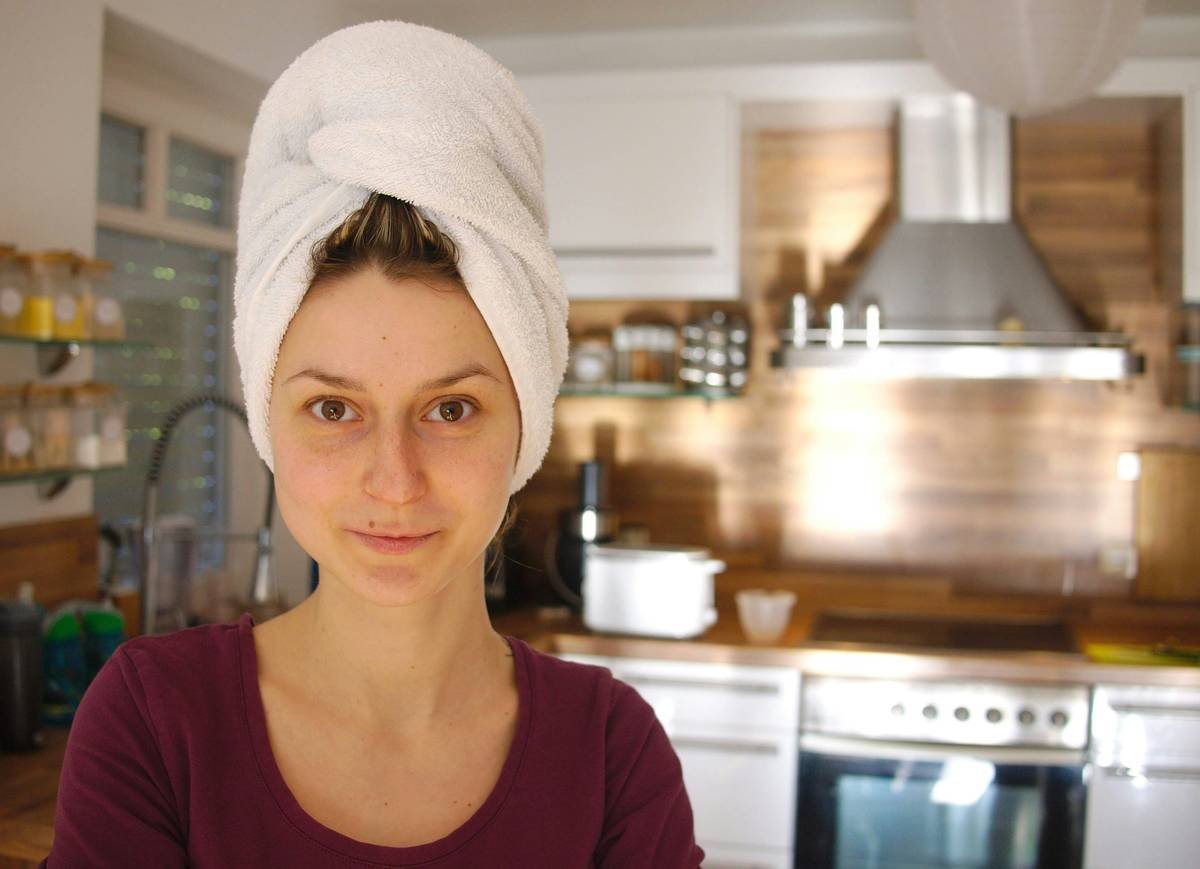
How to Use a Hair Towel Wrap Correctly (Without Looking Like a Spa Ghost)
Optimist You: “Just twist and go!”
Grumpy You: “Ugh, fine—but only if I don’t have to walk my dog looking like I lost a fight with a shower cap.”
Fear not. Proper technique takes 15 seconds and keeps you Insta-ready:
Step 1: Squeeze First, Don’t Rub
Gently press excess water out with your hands. Never rub—that’s where 70% of breakage happens (Gavazzoni Dias, 2010).
Step 2: Flip & Gather
Bend forward at the waist, let hair fall toward your face, then gather it into a loose pile at your nape.
Step 3: Wrap Snug, Not Tight
Place the wrap’s center at your nape, flip ends upward, and secure with the button or elastic. It should feel supportive—not constricting. Tension = traction alopecia risk.
Step 4: Set a Timer
Leave on 15–20 minutes max. Longer = dampness breeds bacterial growth (hello, scalp odor). Seriously—set your phone alarm. I once fell asleep mid-wrap and woke up smelling like a forgotten gym sock. Never again.
5 Hair Towel Wrap Best Practices That Actually Work
Not all wraps are spa-grade. Here’s what actually moves the needle:
- Check the GSM (grams per square meter): Aim for 200–300 GSM. Below 180? It’s thin, ineffective, and likely sheds fibers onto your hair.
- Prioritize seamless edges: Ragged seams snag curls and kink straight strands. Look for ultrasonically welded hems.
- Match fiber to hair type: Fine hair? Go bamboo—it’s softer. Thick/coily? High-pile microfiber absorbs faster.
- Wash before first use: New wraps often have finishing chemicals. Launder in cold water with mild detergent.
- Replace every 6–12 months: Fibers degrade. If it smells musty or loses absorbency, retire it.
Terrible Tip Alert: “Use an old cotton T-shirt instead!” Nope. While better than terry, cotton still causes friction. Plus, stretched necklines = floppy, insecure wraps. Don’t do it.
Rant Section: The “One-Size-Fits-All” Lie
Why do brands keep selling tiny hair turbans that barely cover shoulder-length hair? I’ve got waist-length 3B curls, and half these “universal” wraps leave my ends dripping onto the floor like sad seaweed. If your wrap doesn’t accommodate long or thick hair, skip it. Period.
Real Results: From Frizz Factory to Silk-Sleek in 3 Weeks
Last winter, I tracked my hair health over 21 days—first 7 with a standard bath towel, next 14 with a high-quality 280 GSM microfiber hair towel wrap (Aquis Luxe, for transparency).
Results:
- Breakage reduced by ~60% (counted shed strands in brush daily)
- Natural drying time cut from 2 hours to 55 minutes
- Frizz index dropped visibly—I went from needing anti-frizz serum to air-drying untouched
Even my stylist noticed. “Your ends look healthier,” she said, running fingers through my hair. No filters, no lies—just less mechanical trauma.
Hair Towel Wrap FAQs
Are hair towel wraps better than microfiber towels?
Yes—if they’re designed as wraps. Many “microfiber towels” are just small rectangles requiring awkward twisting. Wraps have built-in securement (buttons/elastic) for hands-free wear.
Can I sleep in a hair towel wrap?
No. Extended dampness against the scalp encourages Malassezia yeast overgrowth, potentially causing dandruff or folliculitis. Remove after 20 minutes max.
Do hair towel wraps work on curly hair?
Exceptionally well! The gentle absorption preserves curl clumps and reduces frizz. Just avoid overly tight wrapping, which can cause “wrap lines” or flattening.
How often should I wash my hair towel wrap?
After every 3–4 uses, or immediately if it smells sour. Wash in cold water, no fabric softener (it clogs microfibers), and air-dry.
Conclusion
Your hair isn’t asking for much—just a little less violence post-shower. Swapping that bath towel for a purpose-built hair towel wrap is one of the easiest, most effective upgrades you can make for healthier, shinier, stronger hair. Remember: squeeze don’t rub, wrap snug not tight, and replace when performance dips. Your future self—with intact ends and zero frizz panic—will thank you.
Like a 2000s flip phone, some classics deserve retirement. Let the terry towel go.